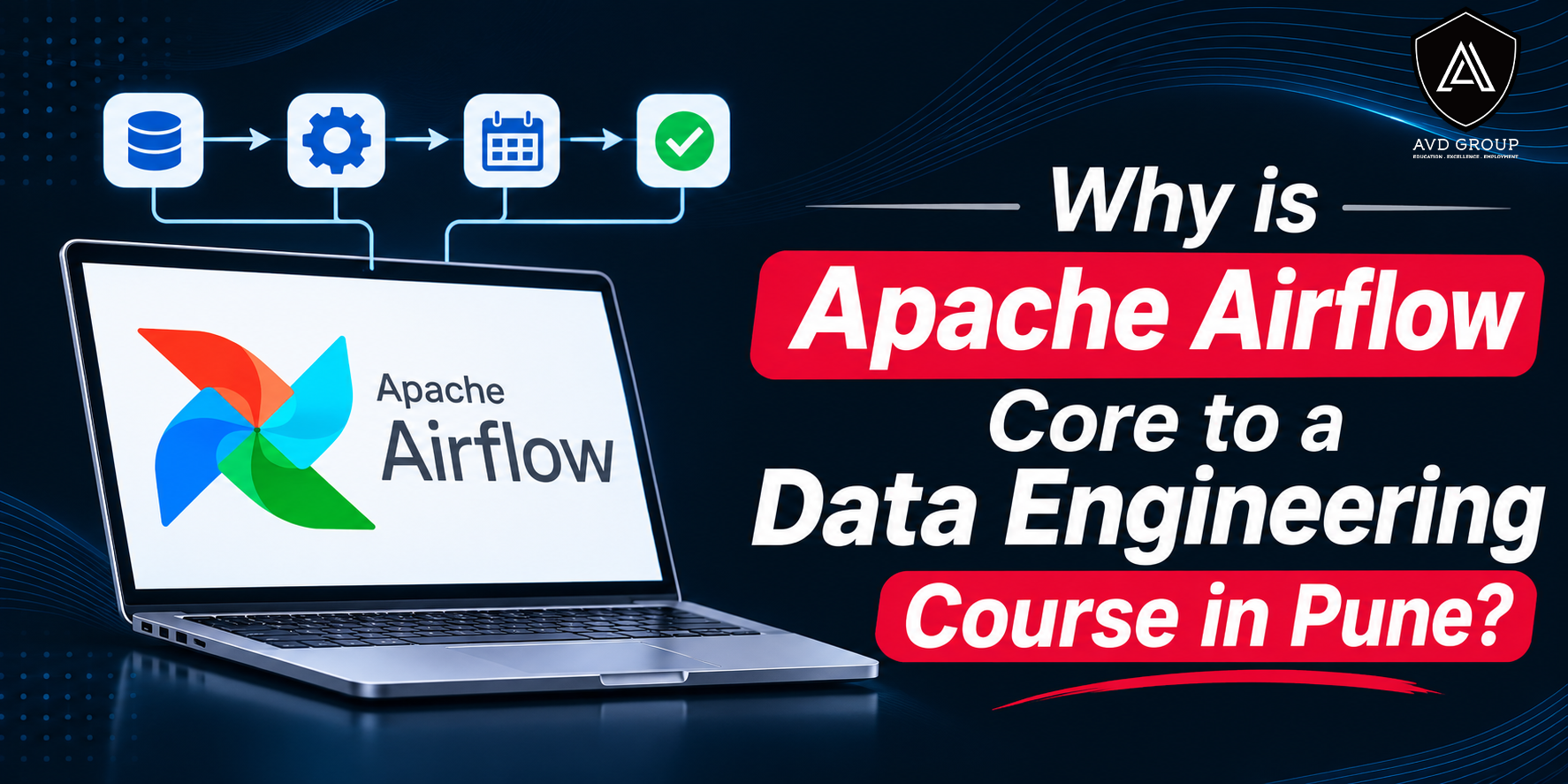

Apache Airflow is core because it teaches how to keep data tasks running on time, in the right order, every day, without anyone watching over them. We at AVD Group build it into our data engineering course in Pune, so you practise the same skills local hiring teams look for. Writing code is only part of the job. Keeping that code running reliably is the rest, and Airflow is where you learn it.
Table of Contents
- What Is Apache Airflow, and What Role Does It Play in a Modern Data Pipeline?
- Why Do Employers Look for Airflow Skills in Data Engineers?
- How Does Learning Airflow in a Data Engineering Course Prepare You for Real-World Projects?
- What Gives Airflow the Edge Over Other Orchestration Tools?
- How Is Learning Airflow Helpful for a Data Engineer in His Career and Salary?
What Is Apache Airflow, and What Role Does It Play in a Modern Data Pipeline?
Airflow is a free, open-source platform that schedules data tasks, runs them in the right order, and sends an alert when one fails. We at AVD Group teach it through hands-on pipeline projects, so you learn how data moves from source to report without anyone pressing buttons by hand. Coordinating all of those steps is known as workflow orchestration, and it is the role Airflow plays in a modern data pipeline.
Why Do Employers Look for Airflow Skills in Data Engineers?
Hiring teams want data engineers who can keep information arriving on schedule without constant supervision, and Airflow is one of the clearest skills that shows it. We at AVD Group train learners to build automated pipelines that flag problems early, so you can show that dependability from day one. Strong data pipeline management also saves a team from late-night fixes, which is a big reason this skill gets noticed in interviews.
Here is what hiring managers look for:
- Reliability: Pipelines that retry on their own and never fail silently.
- Clarity: Tasks arranged so teammates can read and fix them quickly.
- Ownership: Someone who spots a broken job before the business does.
- Teamwork: Work that fits neatly with the other tools a team already uses.
How Does Learning Airflow in a Data Engineering Course Prepare You for Real-World Projects?
Practising Airflow gives you a feel for the problems a working team deals with every week, such as late data, broken tasks, and repeat runs. We at AVD Group teach it through live project mentoring, where you build a workflow, watch it fail, and fix it, so the experience matches the job.
A good course also covers ETL pipeline automation, where data is pulled from a source, cleaned, and stored without manual effort. DAG scheduling is part of it too. A DAG is simply a map of tasks, and scheduling it means setting when it runs, which task goes first, which one waits, and what happens after a failure. Once you can do that, handling a real project feels familiar instead of overwhelming.
Already working? Read: How to Do a Data Engineering Course With a Full-Time Job?
What Gives Airflow the Edge Over Other Orchestration Tools?
Airflow stands out because of regular Python and a single screen that shows the status of every task. Beginners can read the code without learning a new language. Experienced engineers can still build large, tangled workflows with it.
We at AVD Group teach Airflow by starting with one simple workflow, then adding scheduling, retries, and bigger projects as you get comfortable. Some of the alternatives require more setup or a different style of writing, so Airflow is easier to start with.
Here are the key benefits for beginners:
- Familiar Language: The Python you already know carries straight over.
- Clear Screen: Each task’s status is visible at a glance, so a failure is quick to spot.
- Big Community: Most questions you get stuck on already have answers online.
- Room to Grow: One tool covers small practice projects and large production systems.
How Is Learning Airflow Helpful for a Data Engineer in His Career and Salary?
Knowing Airflow well takes you beyond writing single scripts and puts you in charge of entire systems, which often opens better roles and higher pay. We at AVD Group guide you through real project work, so you finish with proof of the skills employers want. Teams trust people who keep critical data running, and that trust usually brings bigger projects and stronger offers over time.
Learn to Build Data Pipelines With AVD Group
Airflow matters because it teaches the part of the job that decides whether data arrives when people need it. At AVD Group, we build our training around hands-on practice, from scheduling tasks to fixing failures the way a real data team would. Contact AVD Group today to book free career counselling and plan your learning path. Once those skills are in place, you stop being someone who writes scripts and start becoming someone teams rely on.
Stay tuned for our next blog, where we will share more practical guides for anyone building a career in data.
Frequently Asked Questions
- Do You Need Coding Experience to Start Learning Airflow?
You need only basic Python to start learning Airflow, and we at AVD Group offer guided sessions that build your coding confidence step by step.
- How Long Does It Take to Learn Airflow?
Learning Airflow takes a few weeks of regular practice, and we at AVD Group offer hands-on projects within our full program that help you build job-ready skills.
- Can Airflow Projects Help You Land Your First Data Engineering Job?
Airflow projects can help you land your first data engineering job by proving you can handle real pipelines, and we at AVD Group offer portfolio-ready projects you can show to employers.